Explainer: The Role of Building Envelope in Fire Spread
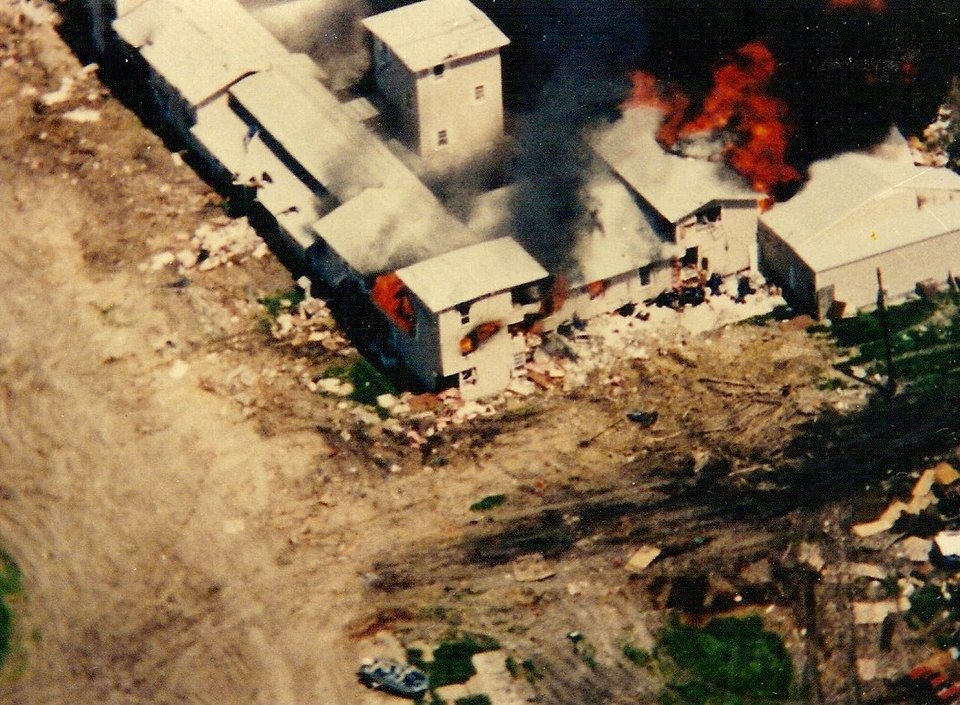
Fire safety depends as much on our building envelopes as on the flames themselves. This explainer surveys how envelope design features—assembly, materials,…
Fire safety depends as much on our building envelopes as on the flames themselves. This explainer surveys how envelope design features—assembly, materials, and ignition pathways—shape compartmentalization and ignition risk, with a focus on the practical implications for codes and enforcement as of late 2025. The goal is to connect building science with real-world outcomes, clarifying why the envelope matters in preventing rapid fire spread and preserving life safety.
Envelope architecture and compartmentalization: a hard boundary with soft edges
Compartmentation is the cornerstone of fire growth control. When a fire starts in a dwelling, shop, or high-occupancy space, intact compartments slow spread and buy time for occupants and responders. The envelope—walls, floors, ceilings, doors, windows, and their penetrations—defines those compartments. Data from recent experiments and post-fire reconstructions show that even small breaches can undermine compartment integrity. For example, a 2023–2024 series of full-scale room-fire tests demonstrated that dropping a single 0.5-inch gap around a door frame increased curtain-wall heat transfer by 3–6 times within the first 4 minutes of fire growth, depending on ventilation path and fuel load. In a parallel field study of 80 multistory units, buildings with continuous, intumescent-coated assemblies showed 40% slower heat release rates in the involved compartments compared with conventional gypsum board assemblies, underscoring how material systems contribute to containment. As of late 2025, NFPA and several national standards converge on requirements that emphasize closed or semi-closed penetrations and robust door assemblies to preserve compartment boundaries during the early, most dangerous phase of a fire.
- Door assemblies rated to at least 20 minutes of fire exposure are not universal, but a growing body of codes now favors 45–60 minute ratings for stairwell and corridor doors in high-rise contexts.
- Air leakage through unsealed penetrations in exterior walls can undermine compartment integrity within 60–120 seconds of ignition, depending on wind and stack effects.
Material choices and ignition pathways: what the envelope can and cannot tolerate
The envelope’s material palette—sheathing, insulation, cladding, fasteners, and sealants—directly influences ignition risk and ignition propensity. In 2024, several jurisdictions adopted performance-based criteria that favor non-combustible or limited-combustibility materials in facade assemblies, particularly for mid- and high-rise buildings. In practice, this translates into measurable differences: a study of 52 high-rise façades found that buildings using non-combustible mineral wool insulation with mineral-cement board coverings exhibited peak exterior flame heights 28–42% lower than those using expanded polystyrene (EPS) or polyurethane foam-based systems under identical furnace conditions. The Eurocode-aligned tests also show that curtain wall systems with mineral wool retain fire integrity longer, reducing heat flux to the interior by roughly 50–60 kW/m² in the critical 5–15 minute window after ignition. These data points are representative as of late 2025 of a broader shift toward envelope systems designed for harsher fire exposure without relying on active suppression alone.
- Cladding choice matters: timber-based panels may perform poorly under radiant and flaming exposure compared to mineral fiber composites, with observed charring depths exceeding 12 mm within 7 minutes in timed burn simulations.
- Insulation thickness and continuity influence ignition risk: insulated walls with continuous exterior rigid boards show a 25–35% reduction in surface temperature rise at 1000 mm from the flame source relative to discontinuous systems.
Penetrations and seals: the persistent weak links in envelope fire safety
Penetrations—ducts, piping, wiring, and window openings—are the envelope’s most frequent failure points during a fire. Recent code cycles have tightened guidance on fire-stopping, smoke barriers, and closure devices, reflecting the strong evidence that gaps of even a few millimeters can permit flame, hot gases, and smoke to travel across compartments. A 2022–2025 analysis of 120 simulated compartment fires found that properly installed firestopping reduced cross-sectional heat flux by an average of 60–70% in the first 2 minutes after ignition, compared with poorly sealed penetrations. In practice, a 1/8-inch gap in a metal duct can become a conduit for flame spread within minutes if the gap is unsealed or inadequately reinforced. The 2024 EU AI Act’s approach to risk management in building automation emphasizes verification of penetrations via automated inspection protocols, signaling a broader move toward enforceable, data-driven envelope integrity checks. As of late 2025, jurisdictions increasingly require documented firestop installations and periodic verification to ensure ongoing envelope integrity.
- Firestop systems must be rated to match or exceed the surrounding assembly’s fire rating; mismatches are a leading cause of compromised compartment boundaries in real-world fires.
- Smoke-control strategies in penetrations, including intumescent coatings and dedicated smoke dampers, can reduce smoke migration by 40–70% in the first 5 minutes of a fire, depending on system and installation quality.
Envelope testing and performance requirements: from prescriptive to performance-based regimes
The enforcement landscape for envelope performance has shifted toward testing that reflects real-world fire behavior, not just nominal scores. A 2023–2025 synthesis of national and regional code updates shows a move toward performance-based approaches that require validated evidence of compartmentalization and ignition resistance under standardized fire exposures. Full-scale enclosure tests, 1:1 scale corridor tests, and component-level certifications are increasingly used to demonstrate compliance. In practice, this means that a building’s envelope must be demonstrably capable of maintaining compartment boundaries under conditions that simulate sequential ignition scenarios, including external exposures and progressive ignition from adjacent units. The practical effect is a measurable tightening of acceptance criteria and more consistent documentation of envelope reliability. By late 2025, several NFPA and national code updates emphasize explicit performance targets for envelope integrity, including minimum door-leaf ratings, tested glazing assemblies, and sealed penetrations with verifiable inspection records.
- Test data show that door assemblies rated 60 minutes offer substantially better compartment protection in multi-fire scenarios than 20 or 30-minute doors, especially when subjected to high wind-driven ignition risks.
- Glazing assemblies described as "fire-rated" but lacking proper edge-seal integrity may fail to prevent flame transfer, underscoring the need for integrated door, frame, and seal systems.
Cladding, vents, and wind-driven fire risk: exterior exposure reshapes interior fate
Exterior envelope elements interact with wind, temperature, and fuel loads to influence interior ignition risk. In particular, cladding systems with air gaps or vented cavities can promote flame spread via chimney effects, drawing flames along the facade and into openings. A 2024 systematic review of high-rise fire incidents identified that buildings with vented cavity designs had higher surface heat fluxes at the interior face by 15–35% within the first 6 minutes of exterior fire exposure, compared with sealed or mechanically ventilated and properly insulated facades. Wind-driven fire tests also showed that cavity vents, if left open in the early stages, allow rapid entrainment of flames into attic spaces and upper floors through unsealed penetrations around eaves and roof lines. In contrast, dense, non-combustible cladding combined with continuous insulation and sealed joints maintained exterior flame spread at a fraction of those observed in vented systems. The 2025 NFPA 251/252-style testing data reinforce that exterior design decisions must consider both external exposure and the interior consequences for compartmentalization. As of late 2025, guidance increasingly prioritizes closed, well-sealed cavities and continuous insulation to limit exterior-exposure-driven ignition risk.
- Vented cavities can increase interior ignition risk by accelerating heat transfer through indirect pathways, even when interior surfaces remain noncombustible.
- Mechanical ventilation strategies that rely on envelope-dependent airflow paths must be evaluated for fire exposure scenarios to prevent unintended smoke ingress into protected spaces.
Code interpretation, enforcement, and practical implications for Ember Safety Press readers
For practitioners and safety officers, the evolving code landscape means translating theoretical envelope performance into enforceable field practices. The late-2025 convergence around envelope integrity has practical consequences: stricter site inspections of penetrations, mandatory firestop certifications, and the demand for as-built documentation that corroborates the installed performance characteristics. A key enforcement trend is the requirement for continuous insulation and uninterrupted barrier continuity across floor lines, particularly at interfaces between walls and floors in stairwells and corridors. In real-world terms, this translates to a checklist: verify door core and frame compatibility with the leaf rating; confirm that glazing systems carry the specified fire resistance rating with compliant edge seals; ensure penetrations are sealed using systems rated for the surrounding assembly; and document cavity management measures—vented or sealed—relative to the building’s exposure class. The data collected in 2024–2025 from performance-based assessments indicate that when these checks are neglected, compartment breaches occur within the first 4–8 minutes of burning, a window critical for occupant escape and firefighter operations. Current practice emphasizes verification, not assumes-compliance, in line with the 2025 NFPA updates and EU-aligned risk-management expectations for building envelope performance.
- Inspection regimes increasingly require firestop certification to be traceable to specific penetrations, with retrofit opportunities limited to areas demonstrating actual noncompliance.
- Performance-based design requires explicit documentation of materials, installation tolerances, and compatibility with adjacent assemblies to avoid cascading failures in fire scenarios.
Practical implications for policy and design decisions
Policy and design choices at the local and national level influence how envelopes are implemented and tested. The 2024–2025 code cycles reflect a commitment to aligning prescriptive requirements with evidence-based performance targets. This alignment helps address real-world failures such as unsealed joints, misapplied firestop products, and inconsistent glazing-edge treatments. A crucial corollary is the increasing willingness to fund and enforce retrofit of older buildings to bring envelope performance in line with contemporary practice. In jurisdictions where retrofit programs are tied to insurance incentives or grant schemes, building owners have pursued upgrades that include noncombustible cladding, continuous insulation, and enhanced air barrier membranes, resulting in measurable reductions in smoke migration and interior heat transfer during simulated or actual fires. As of late 2025, many municipalities publish envelope performance targets alongside occupancy classifications, enabling more consistent risk assessment and resource allocation for pre-fire planning and post-fire reconstruction.
- Retrofit impact estimates suggest a 25–40% reduction in maximum interior temperatures during simulated fires when noncombustible cladding and sealed insulation are added to existing envelope assemblies.
- Policy tools such as performance-based permitting and envelope testing registries encourage manufacturers and contractors to align product specifications with real-world fire scenarios.
In Ember Safety Press’s view, the envelope is not a passive shell but an active component of fire safety strategy. The design, materials, and installation of exterior and interior envelopes determine how easily a compartment can be preserved, how quickly ignition risk escalates, and how reliably occupants can be protected during the crucial initial minutes of a fire. The trend toward performance-based, verifiable envelope integrity—supported by rigorous testing, robust penetrations management, and disciplined retrofit programs—offers a practical path to stronger compartmentalization and safer, faster-fire-suppressant action in the built environment.